 Sweet treats
 Meals
 Drinks
Experience
The Curious Case of Miracle Berry
Chew a miracle berry, bite into a lemon, and the sour can taste surprisingly sweet. Here’s what happens on your tongue and in your brain, and how to try it yourself.
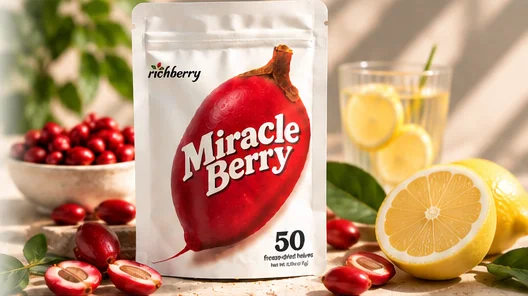
Your tongue is not a blank slate
What you’ve just eaten can change the taste of what you eat next, for better or for worse. Your taste buds respond differently when the environment around them shifts.
You’ve probably noticed it already. Drink a glass of lemon juice after brushing your teeth, and its usual blend of sour and sweet can taste foul.
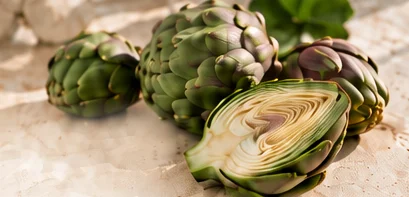
The artichoke trick
Here’s a stranger one: eat an artichoke, then drink a glass of water. The water can taste strangely sweet.
Artichokes contain a substance called cynarin. It settles into your sweet receptors without switching them on. When you sip water, the cynarin is washed away, the receptors are released, and your brain reads the water as sweet. It’s only a “phantom taste”, but it feels real.
How the miracle berry works
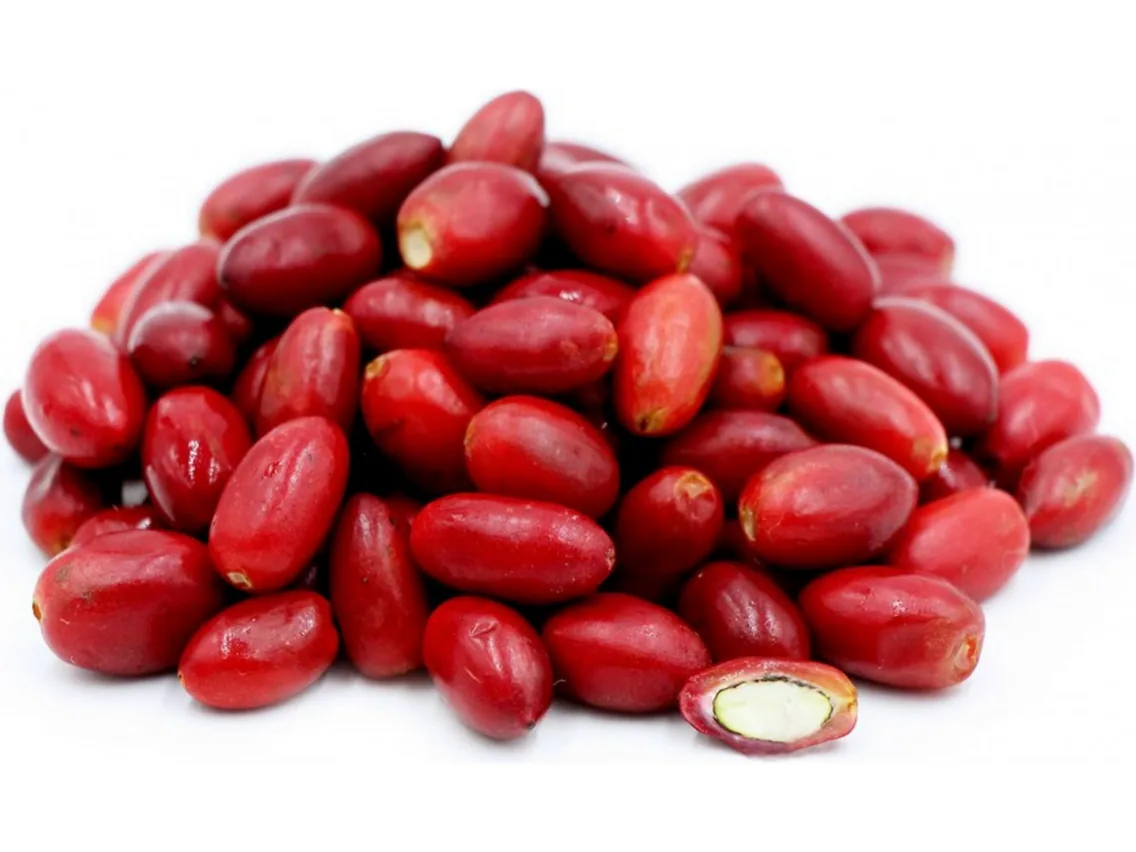
For taste-bending, though, the star is the miracle berry, a small red berry from West Africa.
Your tongue is covered in clusters of taste-sensitive cells. Each cell’s surface carries proteins that work like doorbells: when a molecule from your food rings one, a message goes to your brain, and you taste sweet, salty, bitter, sour or umami.
The miracle berry contains a protein called miraculin. It clings to your tongue like a caterpillar to a leaf and, on its own, has hardly any taste.
Then something acidic arrives: a slice of lemon, an orange, a salt-and-vinegar chip. The acid changes miraculin’s shape, and it switches on your sweet receptors. Sour suddenly tastes sweet.
The food itself doesn’t change: no sugar is added and no acidity is removed. Only your perception does. For a closer look, read why sour fruits taste sweet with miracle berry.
What your brain makes of it
The sourness doesn’t simply vanish. Research suggests your tongue still registers it, but the signal is drowned out by the sweetness.
In a brain-imaging study by Yamamoto and colleagues, volunteers tasted a citric acid solution after chewing miracle fruit. They described it as mostly sweet, with a slight sourness creeping back towards the end. And the brain’s taste area responded to it much as it did to sugar, at about the same moment.
It was a small study, with reliable recordings from only 7 of 28 volunteers, but a curious one.
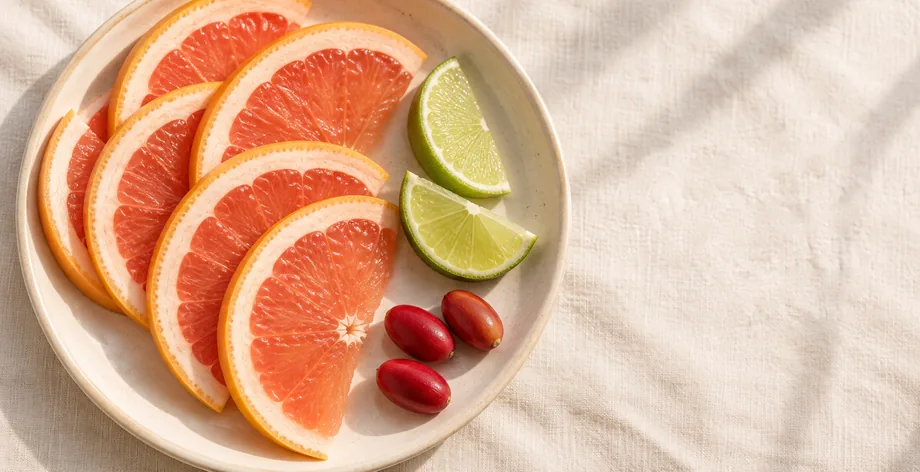
Sour turns sweet, sweet stays sweet
In a taste-panel study at the University of Florida, Hudson, Bartoshuk and colleagues asked volunteers to rate ten foods before and after miracle fruit.
Sour foods (vinegar, lemon, mustard, pickles) tasted sweeter and less sour. Foods that are both sour and sweet, like strawberries and tomatoes, tasted sweeter too. Chocolate and maple syrup were largely unchanged. And the effect was temporary.
Try it for yourself
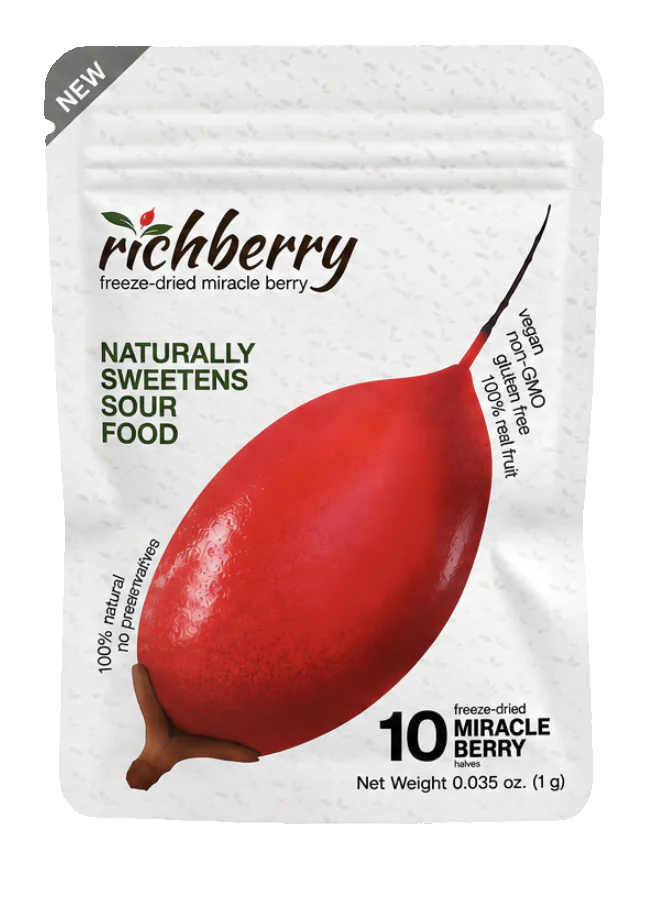
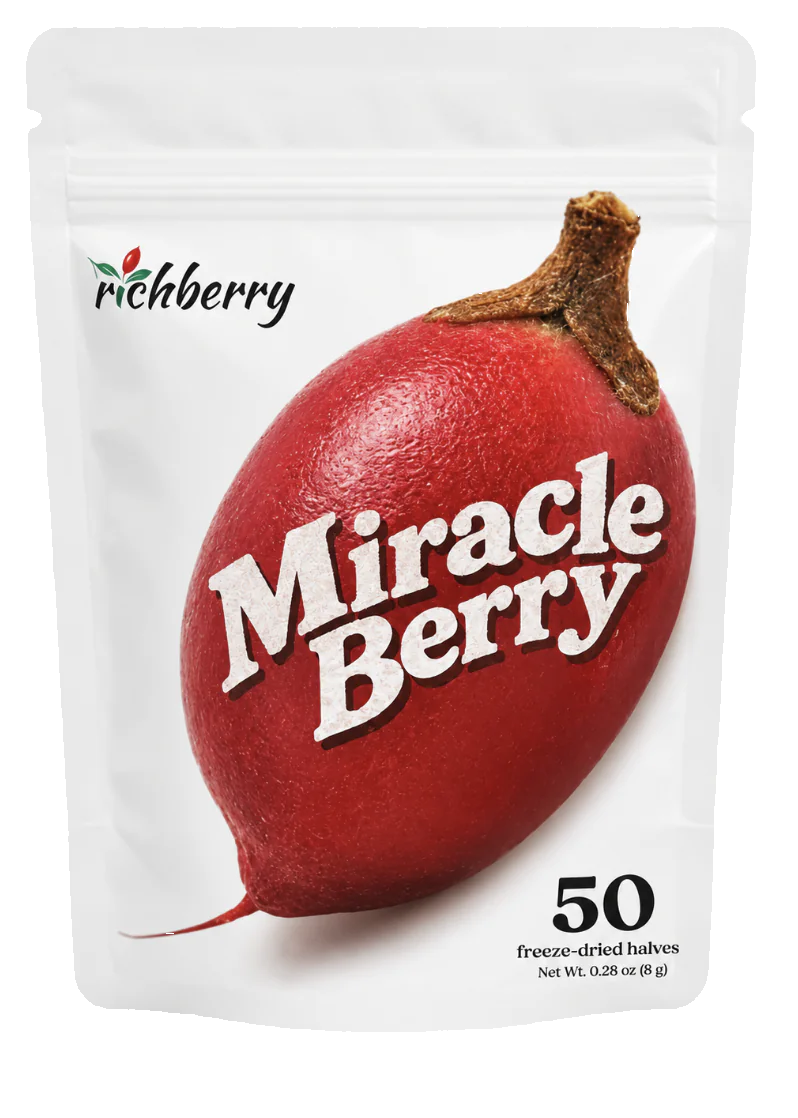
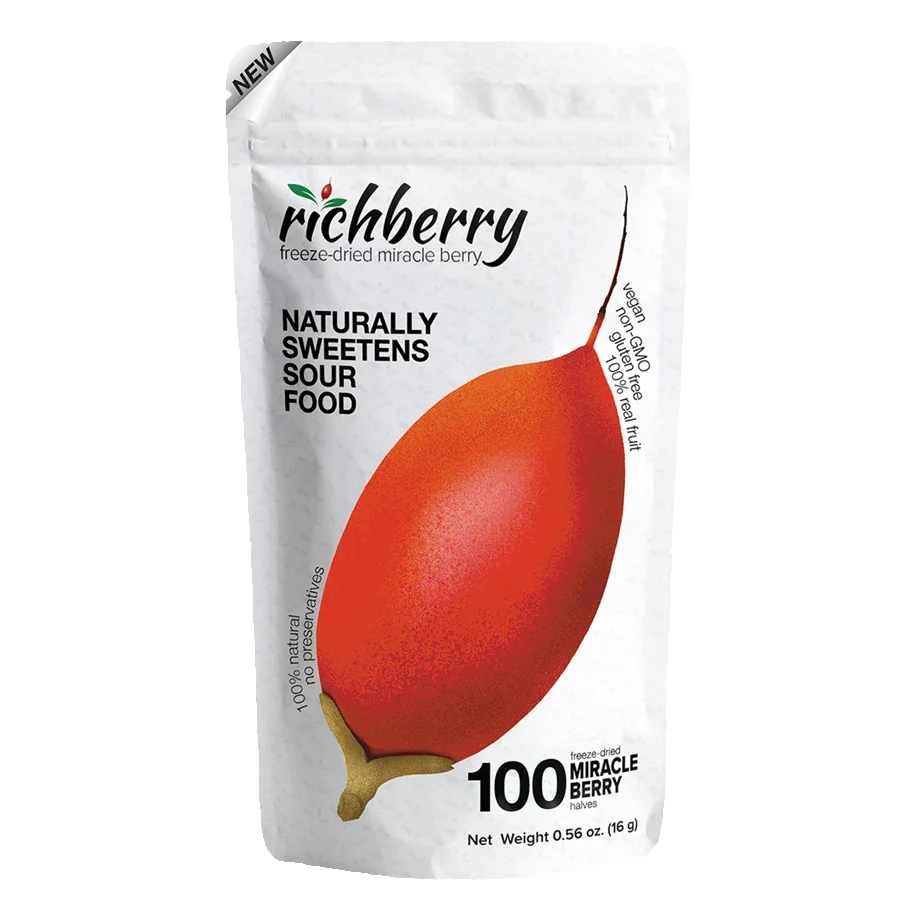
Take 2–3 freeze-dried halves, chew them gently and let them linger for about 30 seconds, discarding any pit. Then suck on a slice of lemon. It may taste closer to candy, or to a good old-fashioned lemonade. Try a drop of vinegar on your tongue, too.
How long the effect lasts varies from person to person. Follow our simple tasting ritual, and see what your tongue makes of it.