 Sweet treats
 Meals
 Drinks
Miracle Berry:
A Brief History
The miracle berry is a small red fruit from West Africa with a curious talent. Here’s where it comes from, who first wrote about it, and why it is still so rare.
A small berry
with a big story.
Native to West Africa
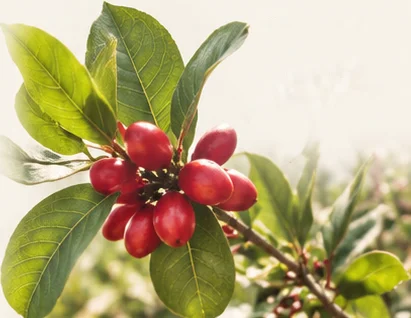
The miracle berry (Synsepalum dulcificum, once called Richardella dulcifica) is native to the hot, humid lowlands of West Africa, including Ghana, Benin, Nigeria and Cameroon. Researchers think it most likely first grew in the region between Ghana, Togo, Benin and Nigeria.
It belongs to the Sapotaceae family, alongside the star apple and shea. In its native habitat it can grow into a small tree of about 5.5 metres. Elsewhere it rarely grows taller than 1.5 metres.
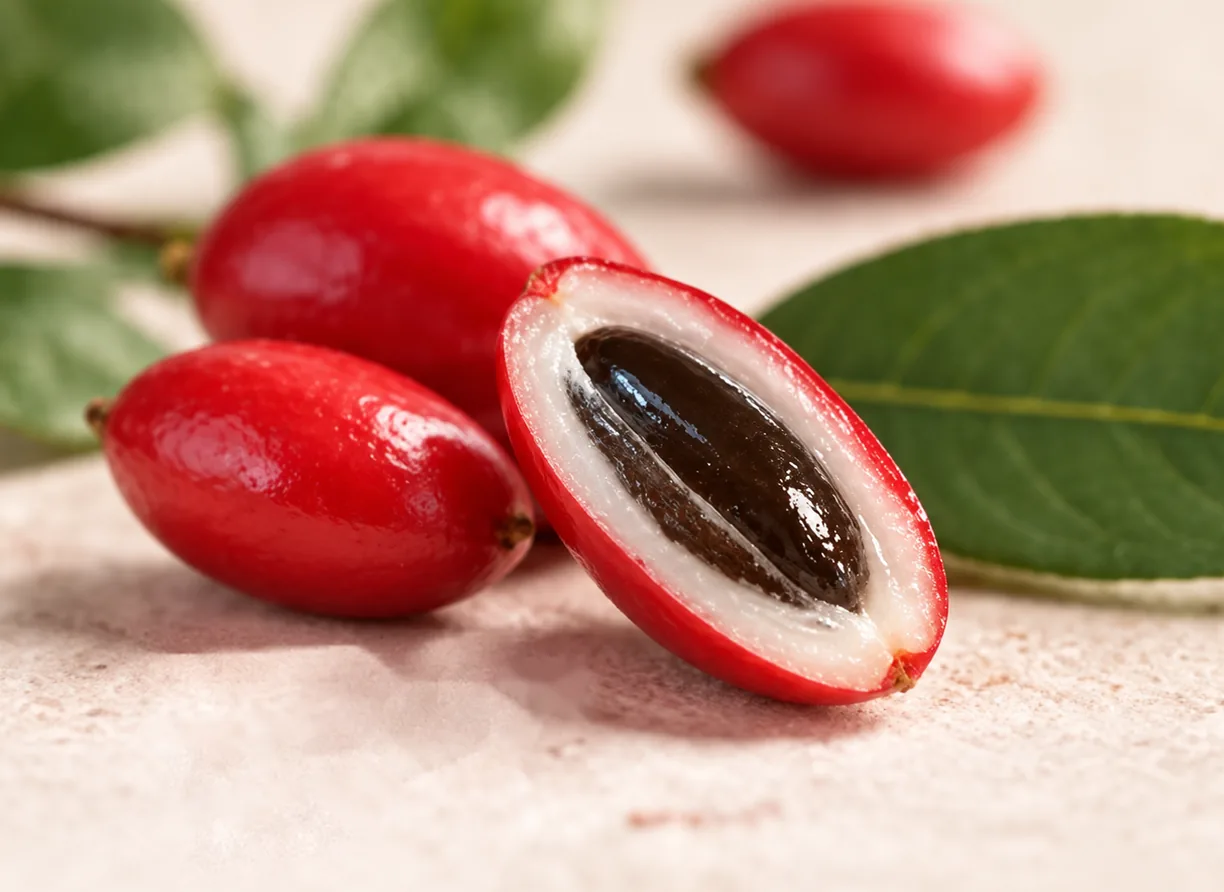
The fruit is olive-shaped and about 2–3 cm long, ripening from green to bright red. Inside is a single seed roughly the size of a coffee bean.

Its natural home:
hot and humid.
One seed
inside.
A taste-changing tradition
People in West Africa knew the berry’s trick long before any European wrote about it. Ghanaians and other West Africans have used it to change the flavour of maize dishes and of drinks such as palm wine and tea, and to make lemon, lime and grapefruit taste sweeter. Its small twigs have even been used as chew sticks.
A simple tradition, still inspiring curiosity today.
An explorer’s account
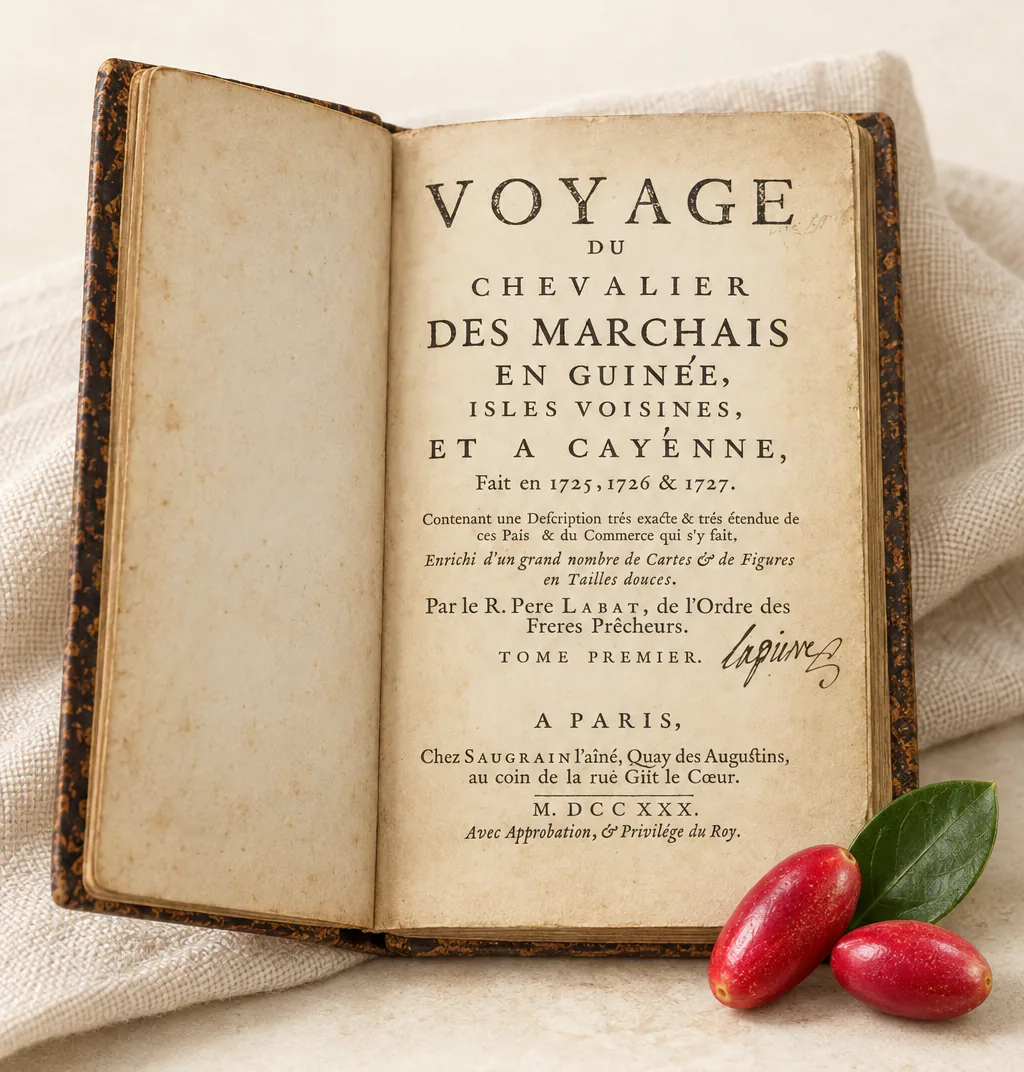
In the 18th century, the French explorer and cartographer Chevalier des Marchais travelled to West Africa. There he came across a plant with bright red berries. He recorded that they changed how the next thing you ate tasted: a sour lemon, eaten afterwards, tasted sweet.
The berry itself isn’t particularly sweet. Its gift is what it does to the food that follows. You can read more about his account, and the protein scientists found centuries later, in Everything You Need to Know About Miraculin.
Our roots
1725
Chevalier des Marchais
Recorded in West Africa in 1725.
A story rooted in local knowledge.
How it works, in brief
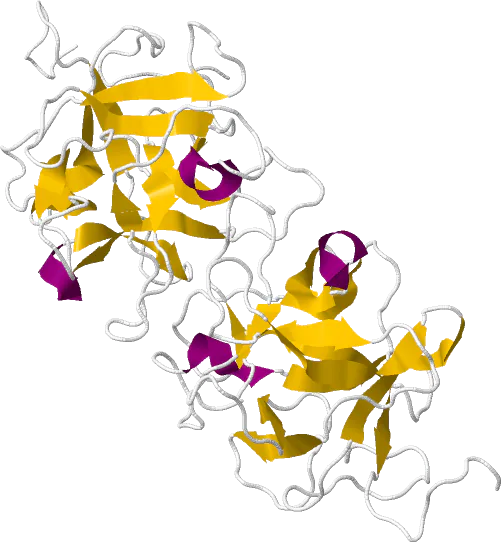
The secret is miraculin, a protein in the berry. On its own it doesn’t taste sweet. But when something sour arrives, the acid switches miraculin on, and it activates the sweet receptors on your tongue. For a while, sour tastes sweet.
The food itself stays the same: no sugar is added and no acidity is removed. Only your perception changes.
One practical note: miraculin is a protein, and heat breaks it down. That’s why the berry can’t be used in cooking.
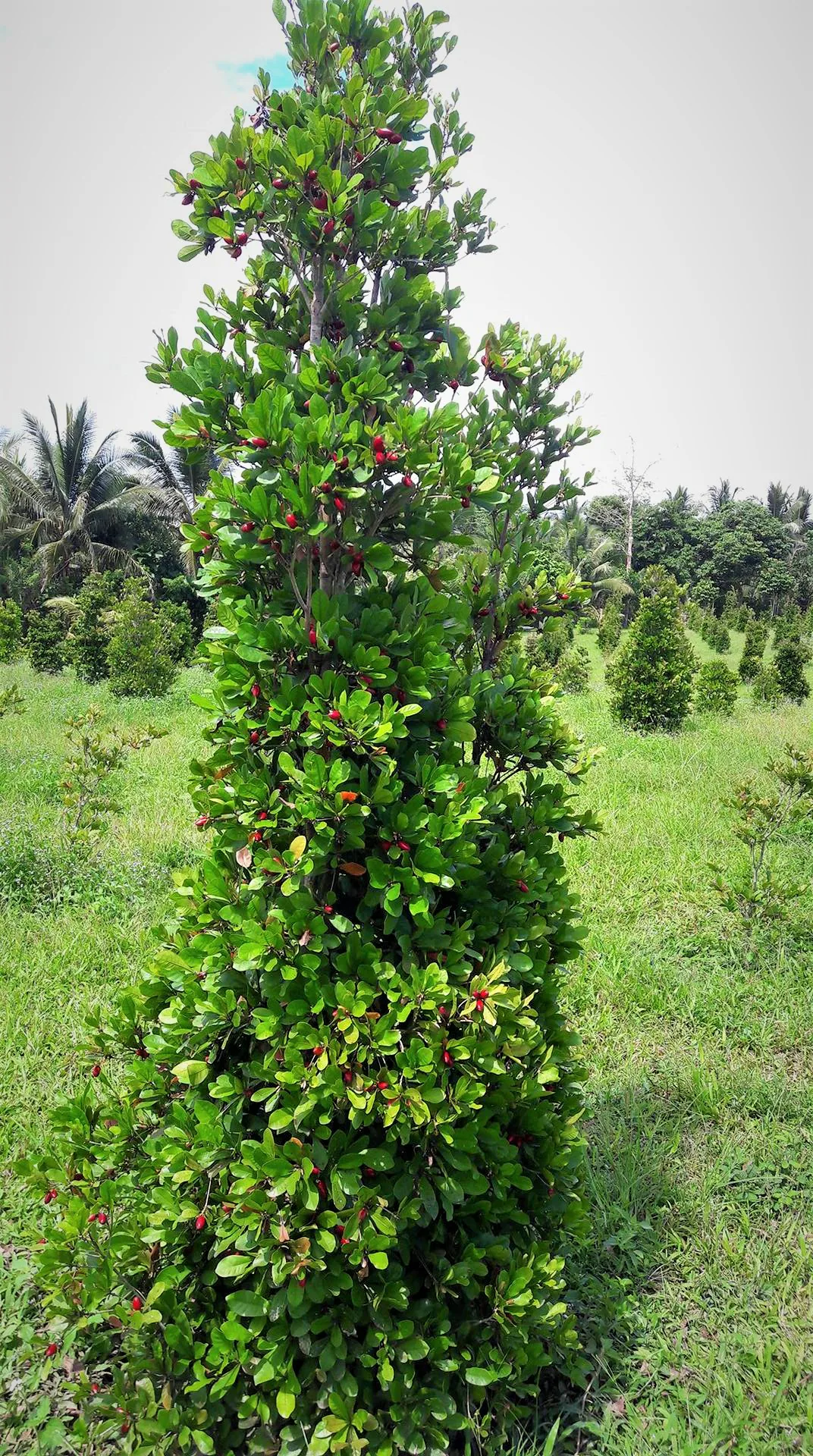
Patience
pays off.
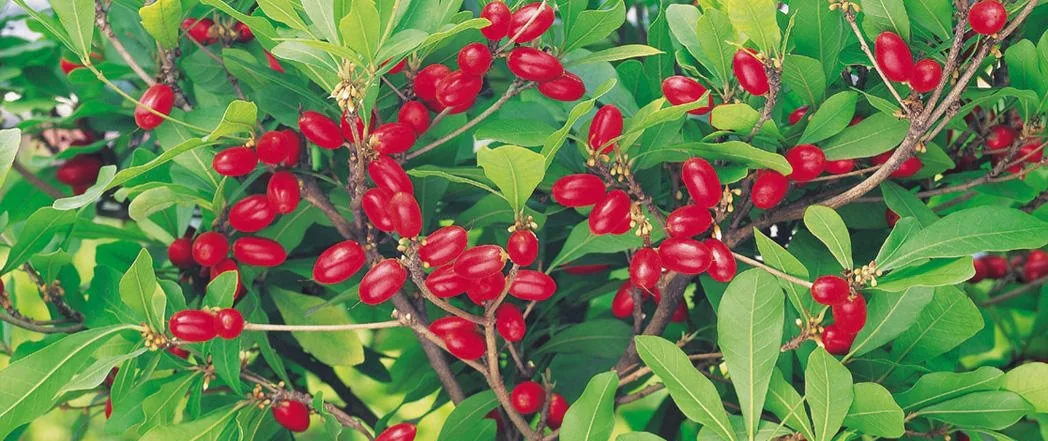
A miracle berry plant, four years old when this photo was taken.
Why it is still rare
Today the plant is grown in warm places far from West Africa, including Taiwan, the Philippines and southern Florida. It needs a frost-free climate, humidity, some shade and well-drained, acidic soil.
It is also slow-growing. Its seeds can’t be stored for long and should be sown within a few weeks. Fresh berries keep for only a few days after picking.
So the miracle berry has never become a major crop. As E. Small notes in a profile of the plant, it remains “a highly desired curiosity”: a house plant in cooler countries and a garden plant in hot ones.
That slow, particular nature is why growing it takes patience. Our family’s farm in Goa, Camarines Sur, began in 2001 with a single seed. It took years of patience, trial and error.